

Protector of Mongolia's Shamanic Heritage and Culture
ANGAR TUNGALAG (shaman)
A distinguished individual who collects authentic shamanic antiques and artifacts from Mongolia's history, studies and develops the history of Mongolia's indigenous shamanism and beliefs, and revives forgotten cultural heritage for the public.

Bayan-Uul, a shamanic ritual site located at the foothills of the Burenkhaan Mountain in Khövsgöl Province, Mongolia.
Our Purpose

Mission
Our mission is to authentically and accurately revive the indigenous Mongolian shamanism, which played a key role in the Great Mongol Empire, where state affairs were discussed, the Sky God was invoked, and the reverence for the great khans was expressed. We aim to pass this heritage down to future generations, accelerate the research on Mongolia’s cultural history, and solidify the position of Mongolian shamanism in world history.

Vision
Our vision is to create a space where diverse cultures can connect and learn from each other. By highlighting shamanic traditions, we aim not only to inspire responsible tourism and sustainable interest in cultural heritage but also to promote and spread the unique history and culture of Mongolia to the world.

Values
Our core values include respect for traditions, commitment to education, and community engagement. We believe in the importance of preserving cultural heritage and are driven by a passion to educate our visitors on the rich tapestry of Mongolian shamanism.
About us
We have made significant efforts not only within Mongolia but also internationally to showcase Mongolian shamanic garments, artifacts, and numerous other items related to the study of Mongolian shamanism. Through exhibitions, we have introduced these items and worked to promote Mongolia's history to the world.

Balar Ertnii Tsadig 1 (Ancient Shamanic Tradition 1) 2018

Balar Ertnii Tsadig 2 (Ancient Shamanic Tradition 2) 2019

Shamanism Festival, South Korea 2023

Chris Murphy, the Executive Director of the London Coliseum Theatre in West End, London, visited our Shamanic Museum.

Historical film consultant
"Gateway to the west"
1242

The documentary film crew from Dflights of Poland, including presenter Dominika Kulczyk, visited our Shamanic Museum.

Dr. Professor Shimamura Ippei from the Ethnology Museum of Japan visited our museum to explore shamanism studies.

Dr. Alexander Lazarvich Katkov, a member of the Board of Directors of the Institute of Psychology of Russia, and Dr. Nazgul Abdullayevna Shyldebaev, President of the Institute of Social Psychology of the Republic of Kazakhstan, visited our Shamanic Museum for research purposes.

Kemecsi Lajos, the Director General of the Ethnographic Museum of Hungary, Dr. Szilagyi Zsolt from the Ethnographic Institute, and the staff of the Ethnographic Museum, Berenyi Mariann and Bazso Borka, visited Mongolia's first Shamanic Museum and explored Mongolian shamanic culture and traditions.

The renowned Hungarian journalist, writer, and social activist Bauer Zsolt, who came to produce a 10-episode documentary about Mongolia, visited our Shamanic House Museum. During his visit, he filmed a segment for his documentary on the shamanic beliefs, rituals, and traditions of the Mongolian people, and I had the opportunity to provide an interview.

Obrusanszky Borbala, the Ambassador Extraordinary and Plenipotentiary of Hungary, visited our Shamanic House Museum.
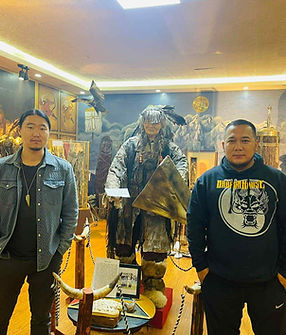
Alexander Mee-Woong Kim, a PhD student in Anthropology and Archaeology at Harvard University, visited our museum for research on the history and culture of shamanism.

Dr. Atay Citron, a professor and director of the Arts Theatre at the University of Haifa in Israel, visited our Shamanic Museum for research purposes.

Dr. Dulam Bум-Очир, the Religious Advisor to the President of Mongolia and Anthropologist, along with Dr. Badam-Очир Gалаарид, the Honored Cultural Worker of Mongolia, visited our Shamanic House Museum.

Dr. Kurshat Yildirim, a faculty member of the Department of Turkish History at Istanbul University in Turkey, visited our museum for research purposes.

Dr. Szilagyi Zsolt, Senior Researcher at the Ethnographic Institute of the Humanities Research Center in Hungary, along with Dr. Santha Istvan, Dr. Somfai Kara, and David, visited our museum for research purposes.

Rufus, a doctoral student from Shropshire University in the United Kingdom, visited our Mongolian Shamanic House Museum for research on shamanism.

State Elder Bymbadordj visited our Mongolian Shamanic House Museum and shared his valuable teachings before leaving.

The national television series of Mongolia, EH ÜV (Heritage), is a documentary program focused on showcasing the country's cultural heritage. Part 1
The national television series of Mongolia, EH ÜV (Heritage), is a documentary program focused on showcasing the country's cultural heritage. Part 2

Initiated by the President of Mongolia, Ukhnaagiin Khurelsukh, the closing ceremony of the "Billion Trees Campaign" was successfully and beautifully held. Representatives from various religions, including Islam, Christianity, Catholicism, Protestantism, Buddhism, and Shamanism, were invited for the first time to join the campaign aimed at saving and reforesting our planet. United under the banner of faith and belief, regardless of religion, the event was concluded successfully, highlighting the spirit of unity and collaboration for the preservation of nature.

The Mongolian Shamanic program "Khollboos" (Connection) features Angar Zairan, a prominent figure in the field of Mongolian shamanism, exploring the deep cultural and spiritual aspects of shamanic traditions.